


Connecticut Tax Relief Services for Lasting Financial Stability
Navigating Connecticut taxes can feel overwhelming, whether you’re a homeowner struggling with rising property taxes, a retiree seeking senior exemptions, or a business facing an audit. At Tax Relief Helpers, our Connecticut tax relief attorneys and experts are here to guide you through every challenge. From back taxes to estate tax questions, we provide practical strategies that restore peace of mind and financial stability.
Request a Free Consultation ➔Tailored Connecticut Tax Relief Services
Every taxpayer’s situation is unique, and Connecticut’s state tax system presents its own challenges. Our team combines decades of experience with local knowledge to resolve issues efficiently and effectively.
Connecticut Property Tax Relief for Seniors
Connecticut offers specific property tax relief programs for seniors and disabled homeowners. These programs, administered by municipalities, can significantly lower annual property tax bills if you qualify. We help you identify exemptions, navigate the application process, and ensure all paperwork is filed correctly with your town’s assessor’s office.
Tax Audit Defense in Connecticut
If the Connecticut Department of Revenue Services (DRS) flags your return for an audit, the process can be stressful. Our tax relief attorneys represent you throughout the audit, ensuring compliance and working to minimize additional liabilities. We handle communication with auditors so you don’t have to face them alone.
Back Taxes & Payment Solutions
Falling behind on state or federal taxes doesn’t have to mean financial ruin. We negotiate directly with the DRS and IRS to arrange manageable installment agreements, reduce penalties where possible, and explore debt resolution programs designed to help you move forward.
Connecticut Estate & Inheritance Tax Guidance
Unlike many states, Connecticut still imposes an estate tax. If you’re managing an estate or planning ahead, our attorneys help you understand exemptions, filing requirements, and strategies to reduce or manage estate tax obligations.
Sales & Income Tax Support
- Connecticut Sales Tax: The statewide sales tax is 6.35%, with no additional local add-ons, but exemptions and special rules often create confusion.
- Connecticut Income Tax Rate: As of 2025, the state has a progressive income tax ranging from 3% to 6.99%. We guide both individuals and businesses through compliance, filing corrections, and refund disputes to prevent costly errors.
A Tax Team You Can Trust
As experienced Connecticut tax relief attorneys, our practice is dedicated to providing personalized legal guidance and effective solutions for taxpayers across the state. We recognize that every case of tax liability or dispute is unique, with its own financial challenges and legal considerations, which is why we approach each situation with care and precision.
Our expertise is built on a strong foundation in both Connecticut state tax laws and federal IRS regulations. This dual perspective allows us to confidently handle complex matters such as audits, back taxes, refund disputes, and even specialized programs like Connecticut property tax relief for seniors. Whether you are managing questions about the state of Connecticut income tax rate, exploring eligibility for exemptions, or dealing with concerns over estate tax obligations, our team is fully prepared to guide you.
We work with both individuals and businesses, taking a holistic approach to tax resolution. Our goal is not only to address the immediate issue—whether that’s negotiating a payment plan, correcting a return, or reducing penalties—but also to help you prevent future liabilities. By combining legal knowledge with long-term planning, our Connecticut tax relief services are designed to give you lasting financial stability and peace of mind.
qualified employees
fighting to lower your tax liability
of tax resolution experience-
our founders are experts
Millions of dollars
in tax liability reduction negotiation every year
It’s Not Just About the Numbers—It’s About Peace of Mind
We know taxes are about more than just paperwork—they affect your mental, emotional, and financial wellbeing. Whether you’ve fallen behind on payments, are facing garnishment, or just can’t get a straight answer about your refund, we’re here to step in and take over.
Our mission is to lift the burden from your shoulders and negotiate directly with the authorities on your behalf, so you can focus on what matters most.

I highly recommend their services...

FAQ
How does Connecticut property tax relief for seniors work?
Eligible homeowners age 65 and older (or those who are totally disabled) can apply for the state’s Elderly or Totally Disabled Homeowners Tax Credit Program through the local assessor’s office. To qualify, applicants must meet income limits ($55,100 for married couples and $45,200 for singles in 2025), and the property must be their primary residence. Benefits are provided as credits on property tax bills, usually up to $1,250 for married couples and $1,000 for singles. Application is required every two years, with paperwork submitted between February 1 and May 15.
What is the state of Connecticut income tax rate?
Connecticut applies a progressive income tax that ranges from 3% to 6.99% as of 2025.
Does Connecticut have a sales tax?
Yes. The statewide sales tax rate is 6.35%. Connecticut does not allow local cities or counties to add extra sales tax, though special higher rates apply to some luxury items and prepared foods.
When are Connecticut taxes due?
Connecticut personal income tax returns are generally due on April 15. Deadlines for businesses and estates may differ, and extensions may be available.
How do Connecticut taxes compare to New York?
Connecticut’s base sales tax (6.35%) is lower than New York’s combined state and local rates, which can exceed 8%. However, average property taxes in Connecticut are higher, while New York cities and counties often add their own income taxes—something Connecticut does not do.
What should I know about Connecticut estate taxes?
Connecticut imposes an estate tax on estates valued above $13.99 million in 2025. Planning ahead is critical because the exemption amount is higher than in previous years and Connecticut does not offer “portability” between spouses. Tax is due within six months of death.
Why Choose Tax Relief Helpers in Connecticut?
We understand that tax problems are not just about numbers—they’re about your life, your family, and your financial security. When you work with us, you get more than just a tax resolution firm; you get a dedicated advocate.
Latest Connecticut Tax Insights
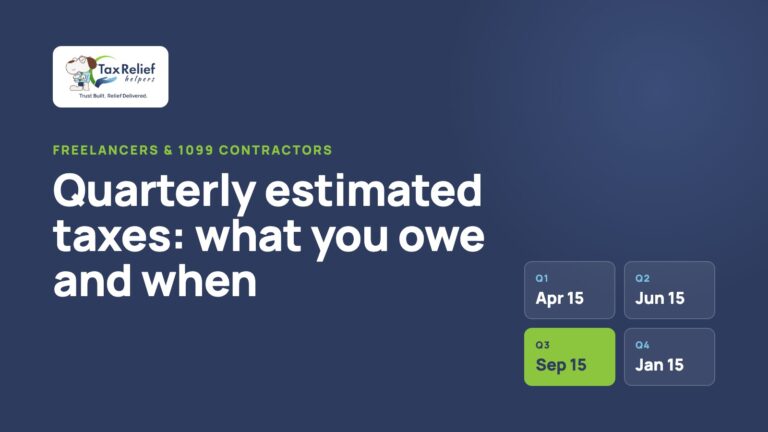
Self-Employed & Freelancer Tax Help, Tax Filing Deadlines & Extensions, Taxes for Freelancers & Self-Employed
Quarterly Estimated Taxes for 1099 Contractors: What You Owe and When
Freelancers and 1099 contractors pay tax four times a year. Here are the 2026 estimated tax deadlines, how much to set aside, the safe harbor…
Currently Not Collectible Status: How to Qualify When You Can’t Pay the IRS
Currently Not Collectible (CNC) status is an IRS hardship determination that pauses wage garnishments, bank levies, and collection notices when you can’t afford to pay.…
What’s the Difference Between an IRS Installment Agreement and an Offer in Compromise?
If you owe back taxes, the IRS offers several programs designed to help taxpayers resolve their debt. Two of the most common options are an…
A Step by Step Guide to the Tax Relief Process with Tax Relief Helpers
1.
Step 1: Initial Contact and Consultation
Reach Out: Begin by contacting our firm via phone, email, or through our website. We offer an initial consultation, which is often free, to discuss your tax situation.
Consultation: During this consultation, you’ll speak with a tax attorney or a qualified tax professional who will assess your tax issues and provide preliminary advice.
2.
Step 2: Gathering and Reviewing Documentation
Information Collection: You’ll be asked to gather and provide all relevant financial documents, tax records, and any correspondence with tax authorities.
Comprehensive Review: Our team will meticulously review these documents to understand the full scope of your tax liabilities and identify potential relief options.
3.
Step 3: Developing a Strategy
Tailored Plan: Based on the review, we’ll develop a customized strategy that aligns with your specific circumstances and goals.
Discussion and Approval: We’ll discuss the proposed strategy with you, ensuring you understand all aspects and agree with the approach.
4.
Step 4: Representation and Negotiation
Representation: As your representatives, we’ll contact the IRS or state tax authorities on your behalf.
Negotiation: We will negotiate with tax authorities, leveraging our expertise and knowledge to seek the best possible outcome, whether that’s an installment agreement, offer in compromise, or another relief solution.
5.
Step 5: Resolution and Agreement
Finalizing the Agreement: Once an agreement is reached with the tax authorities, we’ll ensure all documents are accurately prepared and submitted.
Negotiation: We will negotiate with tax authorities, leveraging our expertise and knowledge to seek the best possible outcome, whether that’s an installment agreement, offer in compromise, or another relief solution.
6.
Step 6: Compliance and Future Planning
Ensuring Compliance: We provide guidance on complying with the terms of the agreement to prevent future liabilities.
Future Tax Planning: Our team offers advice and planning services to help you manage your taxes going forward, avoiding similar issues.
7.
Step 7: Ongoing Support and Consultation
Continuous Support: Even after your tax issue is resolved, we’re available for any further questions or additional assistance.
Periodic Check-ins: We offer periodic check-ins or consultations to help you stay on track with your tax responsibilities.