


Your Guide to Tax Relief in Pennsylvania
Pennsylvania residents face a layered tax system managed by the Pennsylvania Department of Revenue, which oversees income, sales, property, and inheritance taxes. The state levies a flat income tax rate of 3.07%, while the sales tax rate is 6%, with higher totals in some local jurisdictions such as Philadelphia (8%) and Allegheny County (7%).
How We Help Pennsylvania Taxpayers
No two tax challenges are the same. Our team develops tailored strategies that help individuals and families regain financial stability and peace of mind.
Resolving Back Taxes and IRS Debt
If you’re behind on payments to the IRS or the Pennsylvania Department of Revenue, we help negotiate installment plans, penalty abatements, or offer-in-compromise settlements designed to reduce what you owe and stop collection actions.
Lowering Your Property Tax Burden
Pennsylvania offers property tax relief for homeowners, seniors, and renters through programs such as:
- Homestead/Farmstead Exclusion – reduces the taxable portion of your home’s assessed value.
- Property Tax/Rent Rebate Program – provides annual rebates to qualifying seniors, widows, and disabled residents.
We handle the paperwork, eligibility checks, and filings to make sure you receive every benefit available.
Guidance on Inheritance and Estate Tax
Pennsylvania still enforces an inheritance tax, with rates between 4.5% and 15%, depending on relationship to the deceased. We assist executors, heirs, and families in completing returns, applying exemptions, and planning estates efficiently to avoid unnecessary taxes.
Defending You During IRS or State Audits
If you receive a notice from the IRS or the Department of Revenue, our attorneys manage the entire process — from document preparation to representation — ensuring compliance while protecting your rights.

A Pennsylvania Tax Team You Can Trust
Our seasoned pros understand Pennsylvania tax rules—including business, sales, and property—alongside IRS regulations. Every case is unique, so we craft a plan to solve today’s issue and help prevent the next one.
With deep knowledge of Pennsylvania state tax law, including property and sales tax, as well as IRS regulations, we’re equipped to handle the complexities of tax resolution. Whether you’re an individual taxpayer or a business owner, our goal is to resolve today’s challenges and help prevent future ones.
qualified employees
fighting to lower your tax liability
of tax resolution experience-
our founders are experts
Millions of dollars
in tax liability reduction negotiation every year
Discover Peace of Mind with Tax Resolution
Our primary goal is to bring you peace of mind and financial stability. We are committed to negotiating with tax authorities on your behalf, seeking resolutions such as installment agreements, offers in compromise, or penalty abatements that best suit your financial situation.
Recognizing the stress and burden that tax liability can bring, our firm ensures a compassionate, confidential, and diligent service. With our guidance, many Californians have successfully navigated their way out of tax liability, and we are here to help you do the same.
Begin your journey towards financial relief today and take the first step in resolving your tax challenges with confidence.

I highly recommend their services...

Common Questions About Pennsylvania Taxes
Does Pennsylvania have a state income tax?
Yes. Pennsylvania levies a flat 3.07% income tax on most earned income, meaning everyone pays the same rate regardless of income. By contrast, New Jersey has a progressive income tax that ranges from 1.4% up to 10.75% for top earners — so individuals with higher incomes often pay less overall in Pennsylvania.
What is the sales tax rate in Pennsylvania?
The statewide sales tax is 6%, but local jurisdictions can add to that. Philadelphia adds a 2% local tax (8% total), while Allegheny County adds 1% (7% total).
Does West Virginia charge sales tax on online ordering?
Some retirement income may be taxable; however, military retirement income is broadly exempt under WV law. Non-military pensions and IRA/401(k) distributions may be partly taxable depending on your situation. Review current WV rules or consult us for a filing review.
Does Pennsylvania tax Social Security and retirement income?
No. Social Security benefits, pensions, and IRA withdrawals made after reaching retirement age are not taxed by Pennsylvania, making the state very favorable for retirees. However, federal taxes may still apply to certain portions of Social Security and other income.
What property tax relief programs are available in Pennsylvania?
Pennsylvania offers several relief programs to help reduce housing costs for homeowners, seniors, and those on fixed incomes. The Homestead/Farmstead Exclusion lowers the taxable portion of your property’s value, while the Property Tax/Rent Rebate Program provides direct rebates for qualifying seniors, disabled adults, and widows or widowers based on income. In addition, many counties offer local property tax exemptions for disabled veterans and low-income residents, helping further reduce annual tax bills.
Does Pennsylvania have an inheritance tax?
Yes. Pennsylvania imposes a state inheritance tax that varies depending on the relationship between the deceased and the heir. Direct descendants (such as children and grandchildren) pay 4.5%, siblings pay 12%, and other heirs pay 15%. The state does not have a separate estate tax, but planning ahead can help minimize or defer these inheritance obligations.
Is there sales tax on clothing in Pennsylvania?
Most clothing and footwear are exempt from state sales tax, but items like formalwear, accessories, and sports equipment remain taxable.
When are property taxes due in Pennsylvania?
Due dates differ by county, but bills are typically issued in spring or summer and must be paid within 120 days. Many localities offer early-payment discounts and impose penalties for late payments.
How do Pennsylvania and New Jersey taxes compare?
Overall, Pennsylvania has lower income tax rates than New Jersey, but property tax levels vary widely across counties and municipalities. Retirement income is taxed more heavily in New Jersey, while Pennsylvania provides broader exemptions for seniors and retirees. Strategic tax planning in Pennsylvania can help residents and businesses maximize these advantages.
Why Pennsylvanians Choose Tax Relief Helpers?
Pennsylvania’s tax code is one of the most complex in the U.S., combining flat income taxes, local property rates, and inheritance requirements unique to the state. Our attorneys bring deep experience in state tax law, IRS negotiations, and property relief programs, ensuring every case is approached strategically and with empathy.
We’ve helped clients reduce back-tax liability, qualify for property rebates, and resolve inheritance filings — delivering lasting financial relief through trusted, personalized service.
Latest Pennsylvania Tax Insights
Self-Employed & Freelancer Tax Help, Tax Filing Deadlines & Extensions, Taxes for Freelancers & Self-Employed
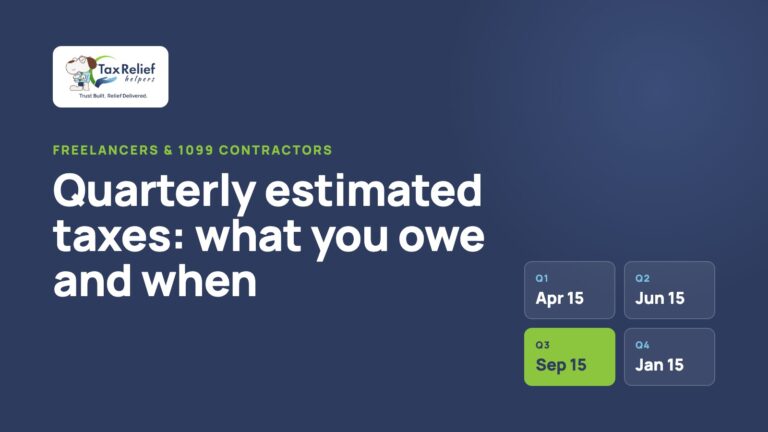
Quarterly Estimated Taxes for 1099 Contractors: What You Owe and When
Freelancers and 1099 contractors pay tax four times a year. Here are the 2026 estimated tax deadlines, how much to set aside, the safe harbor…
Currently Not Collectible Status: How to Qualify When You Can’t Pay the IRS
Currently Not Collectible (CNC) status is an IRS hardship determination that pauses wage garnishments, bank levies, and collection notices when you can’t afford to pay.…
What’s the Difference Between an IRS Installment Agreement and an Offer in Compromise?
If you owe back taxes, the IRS offers several programs designed to help taxpayers resolve their debt. Two of the most common options are an…
A Step by Step Guide to the Tax Relief Process with Tax Relief Helpers
1.
Step 1: Initial Contact and Consultation
Reach Out: Begin by contacting our firm via phone, email, or through our website. We offer an initial consultation, which is often free, to discuss your tax situation.
Consultation: During this consultation, you’ll speak with a tax attorney or a qualified tax professional who will assess your tax issues and provide preliminary advice.
2.
Step 2: Gathering and Reviewing Documentation
Information Collection: You’ll be asked to gather and provide all relevant financial documents, tax records, and any correspondence with tax authorities.
Comprehensive Review: Our team will meticulously review these documents to understand the full scope of your tax liabilities and identify potential relief options.
3.
Step 3: Developing a Strategy
Tailored Plan: Based on the review, we’ll develop a customized strategy that aligns with your specific circumstances and goals.
Discussion and Approval: We’ll discuss the proposed strategy with you, ensuring you understand all aspects and agree with the approach.
4.
Step 4: Representation and Negotiation
Representation: As your representatives, we’ll contact the IRS or state tax authorities on your behalf.
Negotiation: We will negotiate with tax authorities, leveraging our expertise and knowledge to seek the best possible outcome, whether that’s an installment agreement, offer in compromise, or another relief solution.
5.
Step 5: Resolution and Agreement
Finalizing the Agreement: Once an agreement is reached with the tax authorities, we’ll ensure all documents are accurately prepared and submitted.
Negotiation: We will negotiate with tax authorities, leveraging our expertise and knowledge to seek the best possible outcome, whether that’s an installment agreement, offer in compromise, or another relief solution.
6.
Step 6: Compliance and Future Planning
Ensuring Compliance: We provide guidance on complying with the terms of the agreement to prevent future liabilities.
Future Tax Planning: Our team offers advice and planning services to help you manage your taxes going forward, avoiding similar issues.
7.
Step 7: Ongoing Support and Consultation
Continuous Support: Even after your tax issue is resolved, we’re available for any further questions or additional assistance.
Periodic Check-ins: We offer periodic check-ins or consultations to help you stay on track with your tax responsibilities.