
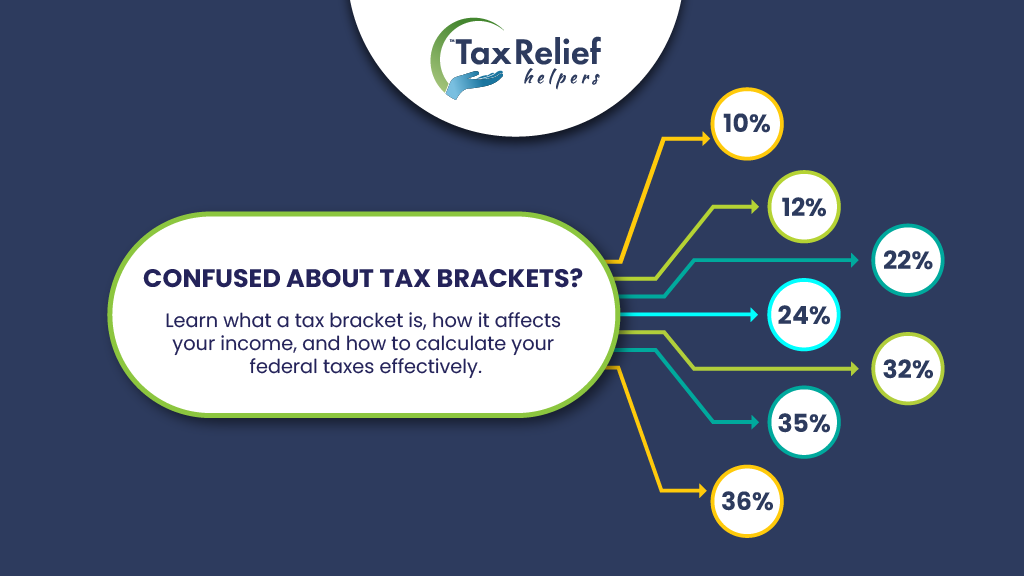
Taxes are unavoidable aspects of adult life that can feel intimidating, especially when jargon like “tax bracket” gets thrown around. If you’ve ever looked at your paycheck and wondered how much of it belongs to you after taxes, or why some people seem to pay a higher percentage of their income than others, you’re not alone.
A tax bracket is a range of income taxed at a specific rate. The U.S. follows a progressive tax system, meaning the more you earn, the higher the percentage you pay—but only on the income within each bracket.
For example, if the first tax bracket is 10% and the next is 12%, only the income within the 10% bracket is taxed at that rate. Any income above that threshold is taxed at 12%, and so on. Importantly, you are not taxed at the higher rate on your entire income, just the portion that exceeds the lower bracket.
Why it matters
Knowing how tax brackets work can help you make smarter financial decisions, especially during tax season. It can guide strategies like timing income, maximizing deductions, or claiming credits, ultimately helping you legally reduce your tax bill.
How Do Tax Brackets Work in the U.S.?
In the U.S., the Internal Revenue Service (IRS) defines federal income tax brackets each year based on inflation and other economic factors. There are typically seven federal tax brackets ranging from 10% to 37%.
Your income is divided into these brackets, and each portion is taxed at the corresponding rate. This system is designed to ensure that higher-income earners contribute a larger share of their income to taxes without overburdening lower earners.
Tax brackets differ based on your filing status:
- Single
- Married Filing Jointly
- Married Filing Separately
- Head of Household
What’s the difference between marginal tax rates and effective tax rates?
To understand how much you’ll owe, it helps to know the difference between marginal and effective tax rates. These two terms sound complicated, but they’re not too hard once you break them down.
What is the Marginal Tax Rate
This is the tax rate you pay on your last dollar earned. In the U.S., we use something called a progressive tax system. That means the government taxes the first part of your income at a lower rate, and higher amounts at higher rates. So, your income is split into pieces (called brackets), and each piece gets taxed differently.
Example:
Let’s say you’re in the 22% tax bracket. That doesn’t mean all your money gets taxed at 22%. Only the money that falls into that bracket does. The earlier parts of your income were taxed at lower percentages, like 10% or 12%.
What is the Effective Tax Rate?
This is your average tax rate—the total percentage of your income you pay in taxes. To find it, you divide the total amount of taxes you owe by the total money you made.
Example:
You earned $75,000 and paid $15,000 in taxes. Your effective tax rate is 15,000 ÷ 75,000 = 20%. That’s lower than your marginal rate because the first dollars you earned were taxed less.
Current Federal Tax Brackets for 2025
Here are the projected 2025 federal income tax brackets (for illustrative purposes; check IRS.gov for updates):
| Tax Rate | Single | Married Filing Jointly | Head of Household |
| 10% | Up to $11,500 | Up to $23,000 | Up to $16,550 |
| 12% | $11,501–$47,150 | $23,001–$94,300 | $16,551–$63,100 |
| 22% | $47,151–$100,525 | $94,301–$201,050 | $63,101–$100,500 |
| 24% | $100,526–$191,950 | $201,051–$383,900 | $100,501–$191,950 |
| 32% | $191,951–$243,725 | $383,901–$487,450 | $191,951–$243,700 |
| 35% | $243,726–$609,350 | $487,451–$731,200 | $243,701–$609,350 |
| 37% | Over $609,350 | Over $731,200 | Over $609,350 |
How to Calculate Your Tax Using Brackets
Let’s say you’re a single filer earning $60,000 in 2025.
- The first $11,500 is taxed at 10% = $1,150
- The next $35,650 ($47,150 – $11,500) is taxed at 12% = $4,278
- The remaining $12,850 ($60,000 – $47,150) is taxed at 22% = $2,827
Total Tax: $1,150 + $4,278 + $2,827 = $8,255
Your marginal rate is 22%, but your effective tax rate is $8,255 / $60,000 = 13.76%.
Why Tax Brackets Matter for Your Finances
Tax brackets help the government decide how much tax you pay based on how much money you make. Knowing your tax bracket can help you make smarter choices with your money.
Why It’s Helpful to Know Your Tax Bracket:
- Plan better: If you give money to charity or put money into a retirement account, knowing your tax bracket can help you get more tax savings from it.
- No surprises: If you get a raise at work or earn extra from a side job, it could move you into a higher tax bracket. Knowing this ahead of time helps you prepare.
- Smarter choices: You can decide between saving in a tax-free or tax-deferred account. (Don’t worry—these are just types of savings that affect how and when you pay taxes.)
For People with Changing Incomes
People who work for themselves or run small businesses don’t always make the same amount of money every month. That makes it extra important for them to understand tax brackets so they can plan and avoid big surprises.
Common Misconceptions About Tax Brackets
- “If I enter a higher tax bracket, I lose more money.” Not true, only the income within the new bracket is taxed at a higher rate.
- “My entire income is taxed at the highest bracket.” Incorrect, your income is segmented, and each segment is taxed at its corresponding rate.
- “Tax brackets are fixed.” They can change annually based on inflation and tax law updates.
Conclusion
Understanding what a tax bracket is isn’t just about decoding tax jargon—it’s a crucial step in making smarter money decisions. Whether you’re planning for the future, trying to reduce your tax liability, or simply aiming to understand your paycheck better, knowing how tax brackets work puts you in control.Now that you know how tax brackets affect your income, consider working with a tax professional or exploring more tips on the Tax Relief Helpers blog.
Written by: Thomas Brooks
Published: September 15, 2025